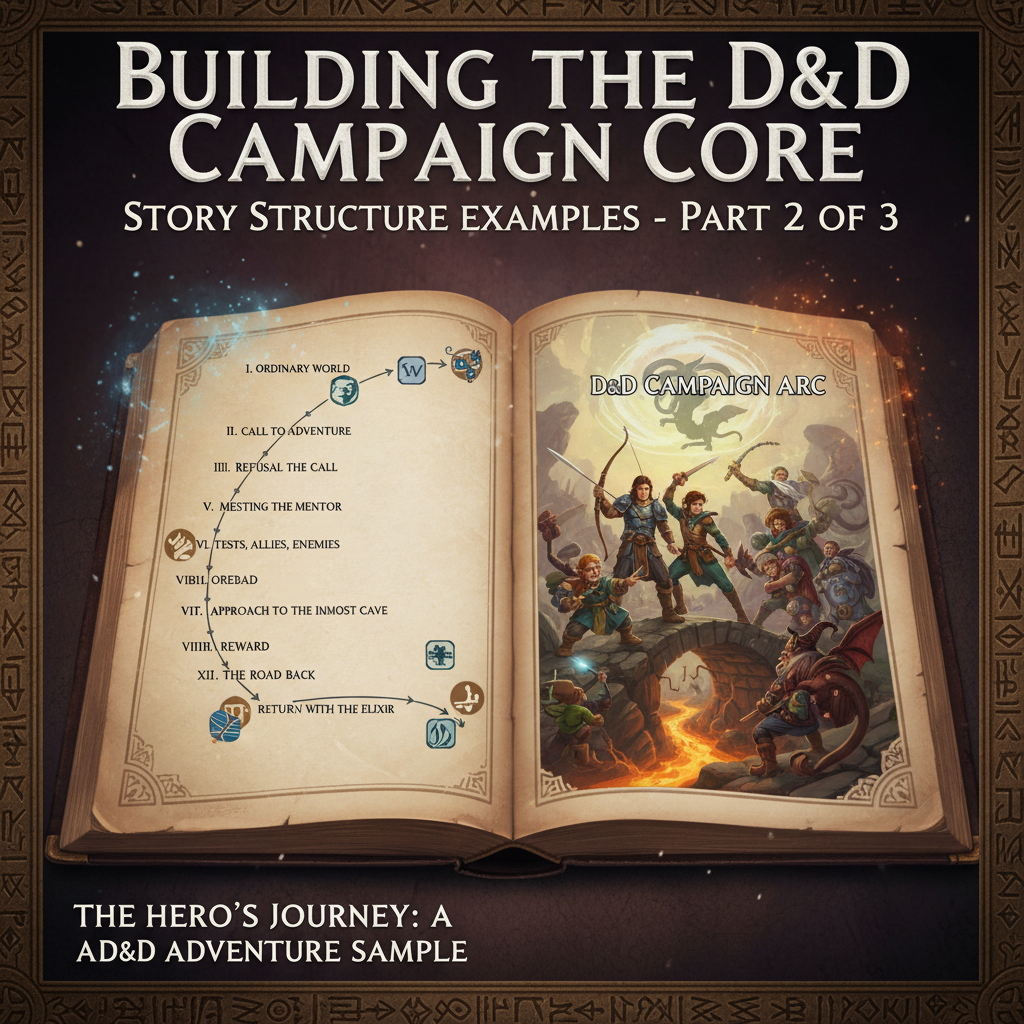
Dungeons and Dragon Story Sample standard story arc
A successful Dungeons and Dragons campaign relies on a consistent structural foundation that balances player agency with narrative momentum. By using a classic d&d narrative structure, Dungeon Masters (DMs) can ensure that their world feels lived-in and that every session contributes to a larger, satisfying payoff. This article explores the essential building blocks of a campaign's middle act—the "Core"—where the stakes rise and the world expands.
Quick Answer: What is a D&D story structure?
A D&D story structure is a conceptual framework, such as the Three-Act Structure or the Hero’s Journey, adapted for tabletop roleplaying games to organize plot points while allowing for player choice. Effective structures typically include a compelling hook, a series of escalating challenges (the "Core"), and a definitive climax that resolves the primary conflict.
Understanding the D&D Story Arc Template
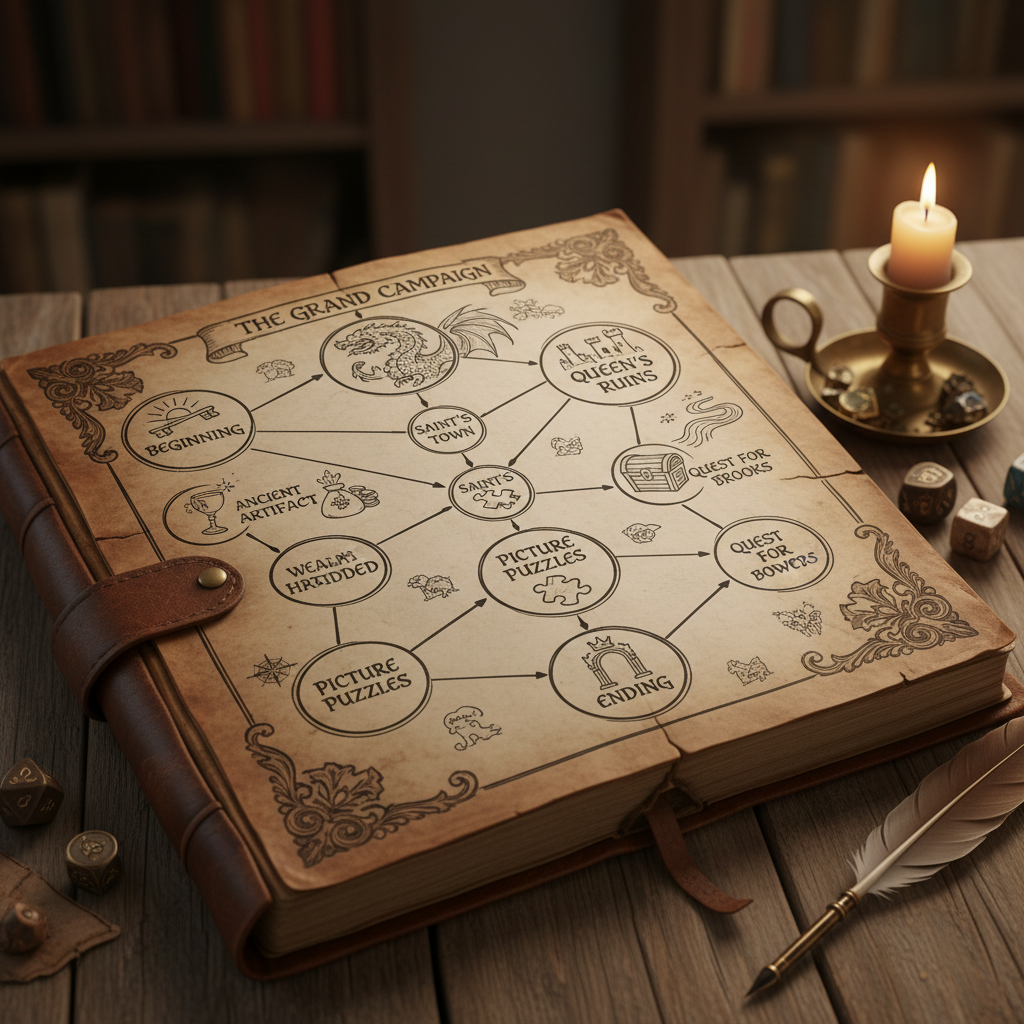
At its simplest level, a d&d story arc template serves as a roadmap for the DM to track the progression of the party’s influence and the antagonist's goals. Unlike a novel, a TTRPG template must remain flexible, acting more as a series of "evolving situations" rather than fixed scenes.
In our experience at Texas Table Top Games, the most resilient campaigns follow a "Node-Based" structure. Instead of a linear path from Point A to Point B, the DM identifies 3–5 major dungeons and dragons adventure plot points and allows players to discover them in any order. This prevents the feeling of "railroading" while ensuring the narrative eventually reaches its intended peak.
Why use a structural framework?
A fantasy storytelling framework for dms provides a safety net during improvisation. When players inevitably go off-script, a well-defined structure helps the DM determine how the world reacts based on existing power dynamics and the villain's timeline. According to narrative theory, a structured approach reduces "prep fatigue" by focusing the DM's energy on high-impact events rather than trivial details.
🥧 The Three-Act Structure in D&D Campaigns
Essential D&D Story Structure Examples
Choosing the right d&d story structure examples depends largely on the length and tone of your campaign. While there are dozens of variations, three primary models dominate the TTRPG landscape because of their adaptability to group play.
The "Relic Hunt" (Serial Discovery)
This is a classic structure where the party must collect a specific number of items to prevent or trigger an event.
The Structure: Introduction -> Item 1 Quest -> Twist/Setback -> Item 2 Quest -> Final Dungeon.
Best For: New players who need clear, achievable goals.
Example: The party must find the three shards of the Amulet of Kings to seal a portal to the Abyss.
The "Political Web" (Intrigue and Factions)
This structure focuses on the relationships between different organizations or NPCs.
The Structure: Introduction to Factions -> Choosing an Ally -> Betrayal or Shift in Power -> The Final Choice.
Best For: Roleplay-heavy groups interested in social consequences.
Example: Two rival dukes are vying for the throne, and the party’s actions determine who gains the military's favor.
The "Ticking Clock" (High Urgency)
This structure places the players on a strict timeline, forcing difficult choices regarding resource management.
The Structure: Outbreak of Threat -> Measuring the Countdown -> Tactical Sacrifices -> The Last Stand.
Best For: Short campaigns or high-intensity "one-shots."
💡 Tip
When building your core, always include a "Mid-Point Twist." At roughly the 50% mark of your campaign, introduce a piece of information that changes the players' perspective on the main villain. This refreshes interest and raises the stakes for the second half. :::
Practical Dungeons and Dragons Campaign Ideas for the Mid-Game
Transitioning from level 5 to level 10 involves moving from local problems to regional threats. As part of a comprehensive ttrpg campaign writing guide writing guide, we recommend shifting the focus from "surviving" to "influence."
- 1 The Shadow Siege: A city the players love is placed under a supernatural quarantine. They must break the siege from the inside.
- 2 The Traitor’s Redemption: An early-game ally is revealed to be working for the antagonist, but only because their family is being held hostage.
- 3 The Planar Odyssey: To find the weapon needed to kill a god, the party must traverse the Elemental Planes, dealing with environments that are as dangerous as the monsters.
:::infographic "Typical Progression of Campaign Scope (Levels 1-20)" type=bar unit=x
| Scope Level | Value | Max |
| --- | --- | --- |
| Local (Village) | 2 | 10 |
| Regional (Kingdom) | 5 | 10 |
| National (Empire) | 8 | 10 |
| Cosmic (Multiverse) | 10 | 10 |
Balancing Narrative Beats and Player Freedom
A common misconception in dungeons and dragons campaign ideas is that a plot point must happen at a specific location. In practice, seasoned DMs use "Quantum Plotting." If you need the players to meet a specific mysterious stranger, that stranger can appear at the tavern in the North just as easily as the marketplace in the South.
"The secret to a great campaign isn't writing a perfect story; it's providing the players with enough interesting ingredients that they end up cooking the meal themselves." — Texas Table Top Games Lead DM
Summary of Key Takeaways
Structure is a Guide, Not a Cage: Use a d&d story arc template to track the "ideal" path, but be ready to pivot based on player actions.
Node-Based Design: Create locations or events that can be tackled in multiple orders to preserve player agency.
Escalating Stakes: The middle of your campaign should transition from personal goals to worldly consequences.
The Mid-Point Twist: Use a significant revelation at the halfway mark to maintain narrative momentum.
Sources
Sly Flourish - The Lazy Dungeon Master
The Alexandrian - Node-Based Scenario Design
Dungeon Master's Guide (Wizards of the Coast)
Read the Full Series
Crafting Your D&D Narrative Hook: Story Arc Begins - Part 1 of 3
Building the D&D Campaign Core: Story Structure Examples - Part 2 of 3 ← You are here
Finishing Strong: D&D Plot Points & Storytelling - Part 3 of 3
In Part 3, we'll explore the final stages of your campaign, including how to land the perfect ending and resolve long-term character arcs. Continue reading: Finishing Strong: D&D Plot Points & Storytelling - Part 3 of 3
