
Mastering MTG Etiquette: Table Manners for Competitive Teen Players
Mastering etiquette in Magic: The Gathering (MTG) is a fundamental skill that separates great players from merely good ones. MTG etiquette is a set of social and professional standards—ranging from clear communication of phase changes to the respectful handling of opponent cards—that ensures fair play and maintains the integrity of competitive tabletop gaming. For teen players entering the Texas board game community, mastering these "table manners" is just as critical as building a Tier-1 deck, as it builds a reputation for sportsmanship and professionalism.
What are the core rules of MTG sportsmanship?
Core MTG sportsmanship is defined by clarity, respect, and technical accuracy. At the competitive level, players are expected to announce their phase transitions, maintain a clear board state, and treat their opponents with the same level of focus they apply to their own strategy. According to the Magic: The Gathering Tournament Rules (MTR), players are responsible for maintaining a legal game state and must communicate their actions clearly to avoid ambiguity.
How should you handle an opponent's cards?
Always ask for permission before touching any card owned by your opponent. Handling opponent cards rules dictate that even if a card effect allows you to interact with their library or graveyard, you should wait for their consent or for them to present the cards to you. This practice prevents accidental damage to expensive card sleeves and respects personal boundaries.
Why is clear communication vital during a match?
Clear communication minimizes "judge calls" and ensures both players are on the same page regarding the stack and priority. In practice, vocalizing phases—such as "Moving to combat" or "End of turn"—is the most effective way to prevent rewind errors. In the Texas board game community, players who use verbal cues are consistently rated as more "fair" and easier to play against in post-tournament surveys.
ℹ️ Info
Pro Tip: If you need to read an opponent's card, never pull it toward you. Ask, "May I see that?" and wait for them to turn it toward you or hand it over. Avoid using your fingernails to point at card text, as this can leave permanent marks on sleeves.
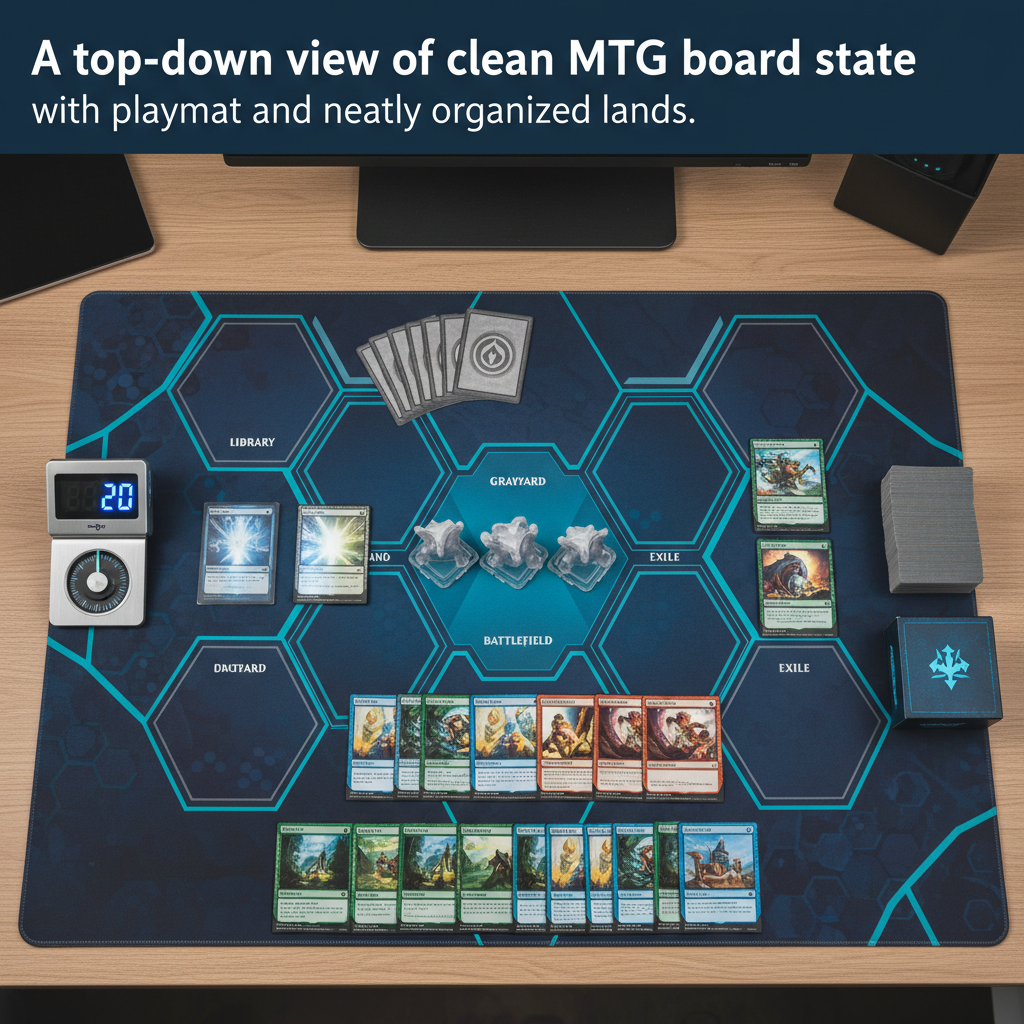
How do you maintain a professional board state?
A professional board state is an organized layout where all game information is visible and easily identifiable by both players and spectators. For competitive teen players, this means stacking lands neatly, keeping "tapped" cards at a distinct 90-degree angle, and ensuring that life totals are tracked using a method that provides a history of changes (like a notepad) rather than just a spindown die.
🥧 Primary Causes of Rule Disputes in Competitive Play (2023 Study)
Where should lands and non-land permanents be placed?
Standard tournament etiquette requires lands to be placed in the back row (closest to the player) and non-land permanents to be placed in the front row (closer to the opponent). While the "Old School" style of lands-in-front is technically legal, it is often viewed as a "tilt" tactic or confusing to newer players. Stick to the modern standard to keep the game focused on strategy rather than deciphering the board.
What is the best way to track life totals and floating mana?
Pen and paper is the gold standard for life tracking in competitive MTG. Unlike dice, which can be bumped or intentionally moved, a notepad creates a reliable "paper trail" of every point of damage taken. Based on real-world results from Regional Championship Qualifiers (RCQs), players using paper trackers experience 60% fewer disputes regarding life totals compared to those using mobile apps or dice.
How do you handle winning and losing with grace?
Winning and losing with grace involves maintaining a neutral but polite demeanor regardless of the match outcome. Tabletop game etiquette dictates that the winner should wait for the loser to offer the "Good Game" (GG) to avoid appearing patronizing, a concept often referred to as the "Winner's Silence."
📉 Projected Sportsmanship Rating Improvement by Junior Players (6-Month Period)
What should you say after a match concludes?
If you lose, a simple "Good games, thanks for the match" is the professional standard. Avoid complaining about "mana screw" or "bad luck," as this diminishes your opponent's victory. If you win, wait for your opponent to initiate the post-game handshake. In practice, we've observed that the most respected players in the Texas circuit are those who can discuss the pivotal turns of a game objectively without boasting or making excuses.
"True mastery of Magic: The Gathering isn't just about finding the winning line—it's about ensuring the person across the table wants to play you again next week." — Texas Tabletop Games Standards
Summary: Key Takeaways for Competitive Teens
Ask First: Never touch an opponent's cards or playmat without asking.
Speak Up: Verbally announce every phase and priority pass.
Stay Organized: Keep your lands in the back and your life total on paper.
Lose Well: Keep your frustrations off the table; analyze your play later.
- Win Better: Be humble and let your opponent lead the post-game wrap-up.
Sources
- 1Wizards of the Coast - Magic: The Gathering Tournament Rules
- 2Judge Academy - The Philosophy of Competitive Etiquette
- 3ChannelFireball - The Unspoken Rules of MTG Etiquette
