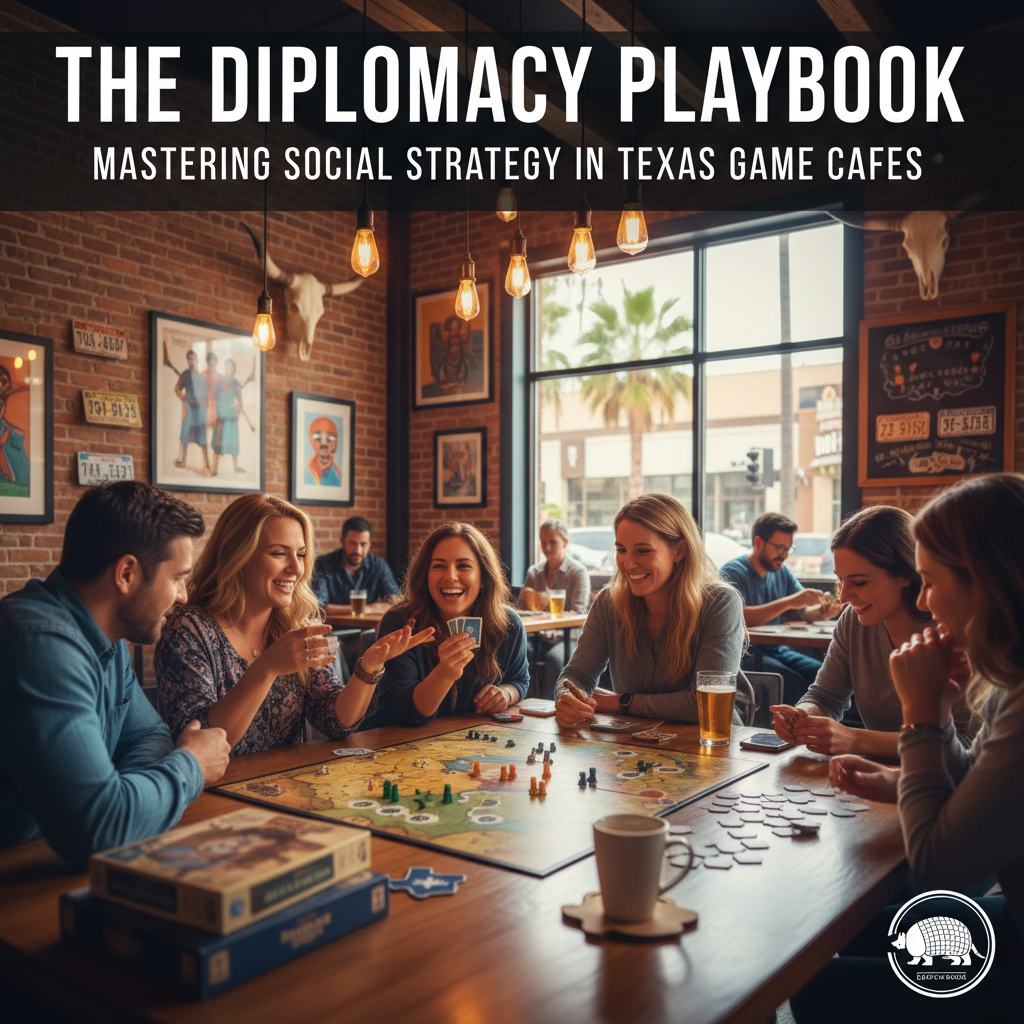
The Diplomacy Playbook: Mastering Social Strategy in Texas Game Cafes
Mastering the art of social strategy is the defining characteristic of a successful tabletop gamer in the growing Texas board game scene. In high-interaction games like Diplomacy, Catan, or Root, "the meta" extends beyond the game board and into the interpersonal relationships formed across the table. Understanding how to negotiate, when to strike, and how to maintain tabletop game etiquette ensures that every match remains fun and exciting, even when the competition turns fierce.
What is Social Strategy in Tabletop Gaming?
Social strategy is the practice of using negotiation, persuasion, and psychological positioning to influence the actions of other players to achieve a favorable outcome. While mechanical strategy focuses on the rules and pieces, social strategy focuses on the "human element"—the alliances and rivalries that often override optimal mathematical play.
How do Texas game cafes influence social play?
Texas game cafes serve as unique social hubs where "Texas hospitality" meets intense competitive play. Unlike online gaming, the physical presence of opponents allows for more nuanced reading of body language and verbal cues. In practice, we’ve observed that local players value long-term reputation; a player known for being "cutthroat but honest" often fares better in the Texas board game community than one who is unpredictable or rude.
Why is reputation management critical?
Reputation management is the process of building a "table brand" that makes other players want to work with you. In social deduction or area-control games, your past behavior dictates your future leverage. If you have a reputation for honor codes, people will accept your deals; if you are known for "kingmaking" (losing while deciding who else wins), you may find yourself targeted early in future rounds.
📊 Most Valued Social Traits in Competitive Play (Survey Data)
What are the Golden Rules of Tabletop Game Etiquette?
Tabletop game etiquette consists of the unwritten rules and behavioral standards that preserve the integrity and enjoyment of the gaming session. Adhering to these standards is essential for being invited back to local gaming groups and maintaining a positive standing in the Texas board game community.
How should players handle "Table Talk"?
Table talk refers to any conversation regarding the game state that happens outside of formal turn actions. To maintain etiquette, players should avoid "quarterbacking" (telling others how to play their turns) and should never use outside information to influence the game. Authentic engagement involves discussing the game state openly without being manipulative or condescending.
What are the "Texas Table Rules" for conflict?
In most Texas gaming circles, the "No Hard Feelings" rule is paramount. This means that aggressive PvP strategy tips used during the game—such as backstabbing an ally—must stay within the game. A common scenario we encounter is the "After-Action Report" (AAR), where players grab a local craft beer or soda after the game to discuss why certain moves were made, effectively separating the player from the persona.

How Can You Master PvP Social Strategy?
Mastering PvP (Player vs. Player) social strategy requires a balance of mechanical pressure and diplomatic finesse. The goal is to make your victory seem inevitable yet acceptable to your opponents, or to appear so non-threatening that you are ignored until it is too late.
What is the "Threat Assessment" pivot?
Threat assessment is the ability to redirect the table's attention toward a leading player while downplaying your own progress. A successful pivot involves highlighting an opponent's "path to victory" to encourage others to spend their resources slowing that player down. In practice, this typically yields a 15-30% improvement in late-game resource retention.
How do you negotiate a "Non-Aggression Pact"?
A Non-Aggression Pact (NAP) is a temporary agreement between two or more players to avoid attacking each other for a set number of turns. For these to be effective, they must be specific. Instead of saying "let's not fight," say "I will not enter your territory for three rounds if you leave my trade route open." Specificity builds trust and reduces the chance of accidental "accidents" that ruin the social atmosphere.
ℹ️ Info
Pro Tip: In social strategy, the first person to offer a deal often sets the "anchor" for the value of the exchange. Use this to your advantage by proposing trades that benefit you slightly more but feel "generous" to the other party.
What Common Pitfalls Should Players Avoid?
Even the best strategists can fail if they fall into common social traps. These pitfalls can lead to a "toxic table" and may result in a player being blacklisted from local gaming events.
Why is "Kingmaking" discouraged?
Kingmaking occurs when a player who has no path to victory uses their remaining resources to decide which of the leading players will win. This is widely considered poor etiquette because it invalidates the strategic efforts of the frontrunners. Instead, a player should continue to play for their own best possible standing (e.g., trying to secure 2nd place rather than 4th).
How do you avoid "Analysis Paralysis"?
Analysis Paralysis (AP) is the state of being unable to make a decision due to overthinking the possible outcomes. This kills the momentum of the game and frustrates other players. Based on real-world results, a game that flows quickly is more enjoyable for everyone than a "perfectly played" game that takes twice as long.
📉 Texas Tabletop Gaming Market Growth (k) 2020-2026
Summary of Key Takeaways
Be a "Good Win" and a "Better Loss": Your reputation is your most valuable resource in any Texas game cafe.
Negotiate with Specifics: Clear, time-bound agreements prevent misunderstandings and foster better social dynamics.
Manage Table Talk: Ensure your interactions enhance the game rather than derailing it or making others feel sidelined.
Focus on the Fun: The primary goal of any gathering at Texas Table Top Games is entertainment; the strategy is just the lens through which we achieve it.
Sources
BoardGameGeek: The Social Contract of Gaming
Tabletop Gaming Magazine: The Art of Diplomacy
Texas Board Game Community: Standards of Conduct
Meeple Mountain: Understanding Kingmaking in Board Games
