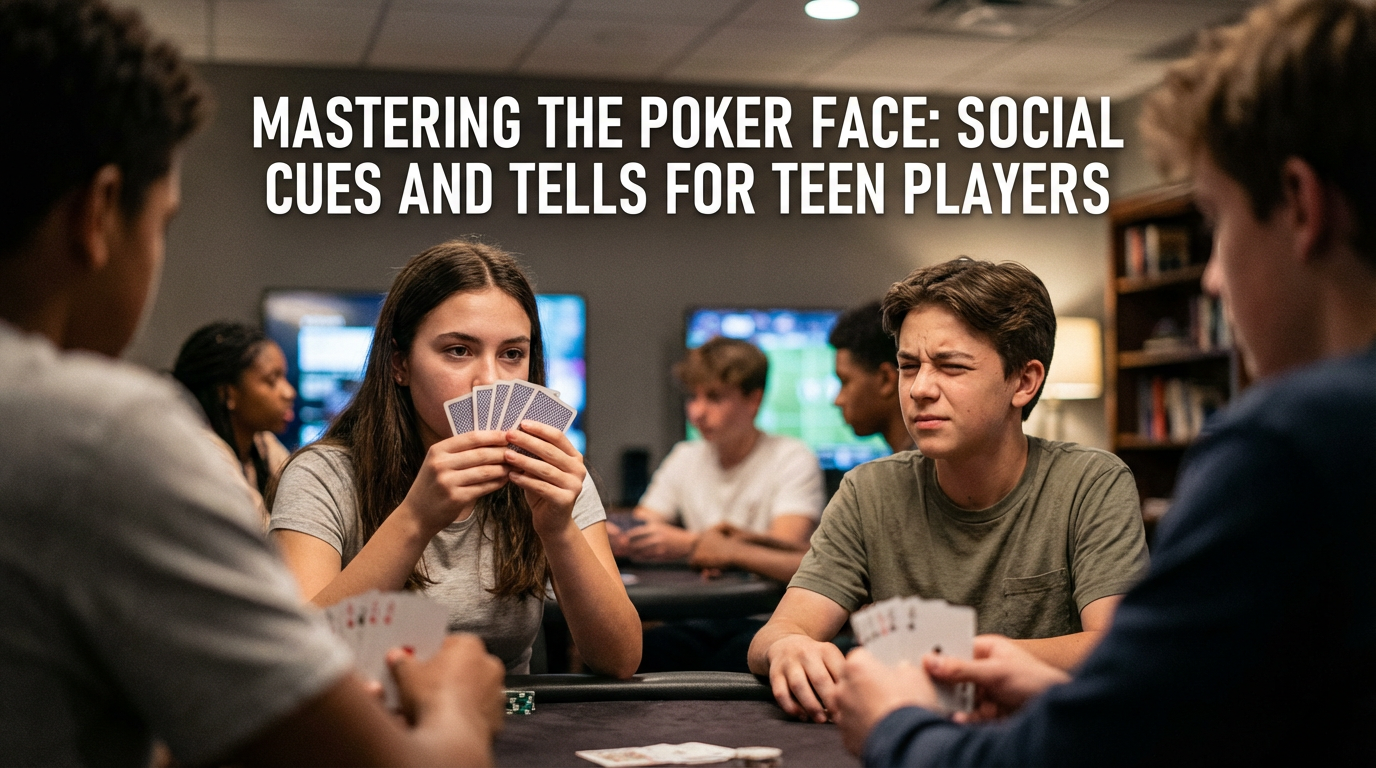
Mastering the Poker Face: Social Cues and Tells for Teen Players
Mastering the "poker face" is the art of maintaining a neutral physical and emotional state to prevent opponents from gaining information about your hand. For teenage players, this involves more than just keeping a still face; it requires an understanding of poker psychology for teens, high emotional intelligence, and the ability to control subconscious physical reactions known as "tells."
Quick Answer: How do you master a poker face?
A perfect poker face is achieved by maintaining a consistent physical baseline—holding the same posture, breathing rhythm, and expression regardless of your hand's strength. Beginners should focus on "freezing" their physical movements and avoiding eye contact during high-stress moments to minimize the risk of displaying a tell.
Is there a specific psychology behind teen poker strategy?
Teen poker psychology centers on the development of the prefrontal cortex, which governs impulse control and long-term decision-making. Because younger players often experience more intense emotional fluctuations during high-stakes moments, mastering a social tabletop game strategy requires active "emotional dampening" to remain unpredictable.
In practice, many teenagers struggle with "impulse betting" or "the smile of relief." When a player sees a winning card on the river, their brain releases dopamine, often causing a micro-expression of joy or a sudden relaxation of the shoulders.
How does emotional control impact the game?
Emotional control, or "tilt management," is the foundation of a strong poker face. If a player becomes visibly frustrated after a loss, opponents will recognize they are playing "on tilt" and likely making irrational, aggressive moves to recoup losses. According to psychology experts, recognizing your own physiological triggers—such as a rising heart rate or sweaty palms—is the first step toward masking them from others.
🥧 Primary Emotional Triggers in Social Card Games
What are the most common tells for beginners?
Reading poker tells for beginners usually involves identifying "discrepancies" in a player's normal behavior. A tell is any physical or verbal habit that provides a clue about the strength of a player's hand.

What should you look for in your opponents?
Typical tells for novice players include:
The "Look Away": Beginners often look away from the pot or their cards when they are bluffing, as eye contact feels confrontational and "guilty."
Postural Shifts: A player who suddenly sits up straight or leans into the table is often showing genuine interest in a strong hand.
The "Shaky Hands" Myth: Contrary to popular belief, shaking hands when betting often signifies a surge of adrenaline from a very strong hand, not a bluff.
Verbal Distractions: "Speech play" or excessive chatting during a hand often indicates a player is trying to appear relaxed because they are actually nervous about a weak hand.
How can you identify a "Reverse Tell"?
Experienced players sometimes use "reverse tells," which is the act of intentionally faking a beginner tell to mislead opponents. For example, a player might purposely let their hand shake while betting a mediocre hand to trick an opponent into thinking they have the "nuts" (the best possible hand).
How do you hide your own tells in poker?
Hiding tells requires "standardizing" your behavior so that your actions are identical whether you have a Royal Flush or a 7-2 offsuit. This technique, often called "the robot method," is the gold standard for how to hide tells in poker.
What are the steps to a "Neutral Baseline"?
- 1 Fixed Gaze: Pick a spot on the table (like the dealer's button or the center pot) and look at it consistently during every hand.
- 2 Consistent Betting Motion: Use the same physical motion to move your chips forward every time. Avoid "splashing the pot" or slamming chips when you are excited.
- 3 Regulated Breathing: Take slow, deep breaths through your nose. Rapid chest breathing is a universal sign of a high-stress bluff.
ℹ️ Info
Expert Tip: Many professional players wear hoodies or sunglasses not just for fashion, but to hide the pulsing of the carotid artery in the neck or the dilation of their pupils—both of which are involuntary physical responses to a strong hand.
How does table position affect social cues?
A significant part of social tabletop game strategy involves "positional awareness." Being the last person to act in a betting round allows you to observe every other player's physical reactions before you have to make a decision.
📊 Success Rate of Reading Tells by Table Position
Why is the "Button" the best seat for reading players?
The player on "the button" (the dealer position) acts last. This means they have the maximum amount of time to analyze the "reaction time" of their opponents. A player who checks instantly often has a weak hand, while a player who pauses to "think" (the Hollywooding tell) before betting big is often trying to appear unsure of a very strong hand.
Key Takeaways for Mastering the Table
Consistency is King: The best poker face is one that never changes, regardless of the cards.
Watch the Hands: Feet and hands are often more honest than the face, as people focus most of their energy on controlling their facial expressions.
Silence is Selective: Only speak if you can maintain the same tone and cadence in every situation.
Practice Mindfulness: Use social games to practice staying calm under pressure, a skill that translates to school, sports, and future careers.
Sources
Psychology Today: The Science of the Poker Face
MIT OpenCourseWare: Theory of Poker and Strategic Decision Making
